
Some time ago I was told that I had white privilege because I was white, that America was founded to protect slavery, and that I should apologize for black slavery with reparations to Blacks. Those claims perked my interest and so I decided to do some research on the history of slavery, how it ended, and the role that Whites had in it. Here is what I found, collected from multiple sources. (Note: this is a long post.)
What it is
A Slave is a human being who is owned as property by, and is absolutely subject to the will of another, divested of all freedom and individual rights. (Webster’s New World Dictionary Third College Edition, 1988)
Slavery is the condition in which one person is owned, controlled, or treated as the property of another person and is forced to work or provide services without freedom to leave.
Key features of slavery include:
- Loss of personal freedom and rights.
- Forced labor or service.
- Control by another person through coercion, violence, or legal ownership.
- Inability to choose where to live, work, or whom to associate with.
Chattel slavery is the condition in which
- The slave is legally considered the property of another.
- The slave can be bought or sold or inherited.
- The slave cannot freely leave or refuse work.
- The slave has few or no legal rights.
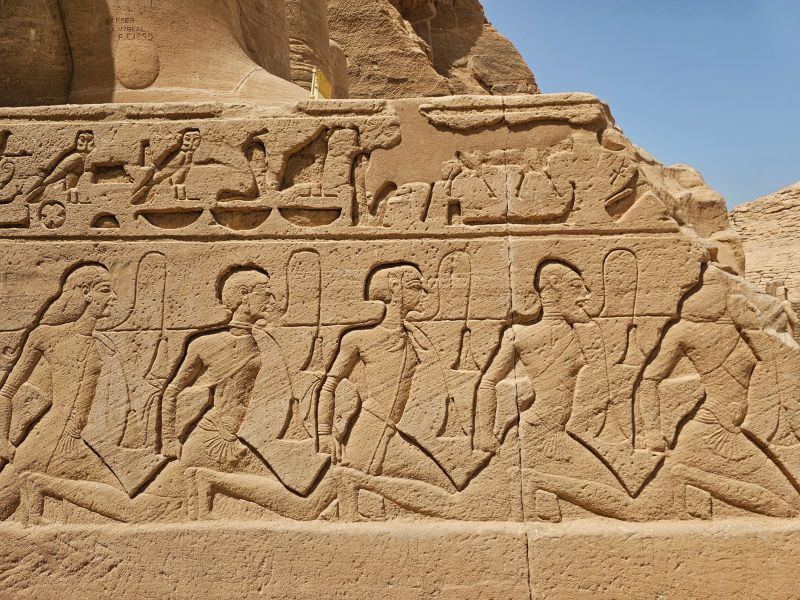
Slavery did not begin in one place or at one time. It developed independently in many ancient societies over thousands of years. Even some archeological stone carvings depict slaves. The oldest evidence of slavery dates back to at least 5,000 years, appearing in early civilizations in regions such as Mesopotamia, Ancient Egypt, Ancient China, and later Ancient Greece and Ancient Rome.
Historically, slavery was widespread and considered normal. It existed in many societies and involved the buying and selling of people. Slavery is the only life ancients knew. It was part of normal life. They thought nothing of it. Slavery varied considerably. In many societies, enslaved people could sometimes earn freedom, own property, or rise to positions of responsibility, though this depended heavily on local laws and customs.
Today, although legal slavery is prohibited in nearly all countries, forms of modern slavery—such as human trafficking, debt bondage, forced labor, and forced marriage—still occur in some parts of the world.
In most early societies, slavery arose through several common pathways:
- War: Captured enemies were often enslaved instead of being killed.
- Debt: People who could not repay debts sometimes became enslaved temporarily or permanently.
- Punishment: Criminals or people who broke laws were forced into slavery.
- Birth: Children born to enslaved people often inherited their status.
- Raiding: Some groups captured people from neighboring communities to use as labor or to trade.
- Destitution: Sometimes parents whose family was starving would sell their children into slavery.
“Blacks were not enslaved because they were black but because they were available. Slavery has existed in the world for thousands of years. Whites enslaved other whites in Europe for centuries before the first black was brought to the Western hemisphere. Asians enslaved other Asians. Africans enslaved other Africans. Even today in North Africa, blacks continue to enslave blacks.” Thomas Sowell, The Federalist Papers
Slave Trade
For most of its long history, which includes most of the history of the human race, slavery was largely not the enslavement of racially different people, for the simple reason that only in recent centuries has either the technology or the wealth existed to go to another continent to get slaves and transport them en mass across an ocean. People were enslaved simply because they were vulnerable, available, and relatively easy to get. And slavery was the norm at that time.
Sowell also wrote: “The region of West Africa … was one of the great slave-trading regions of the continent — before, during, and after the white man arrived. It was the Africans who enslaved their fellow Africans, selling some of these slaves to Europeans or to Arabs and keeping others for themselves. Even at the peak of the Atlantic slave trade, Africans retained more slaves for themselves than they sent to the Western Hemisphere. … Arabs were the leading slave raiders in East Africa, ranging over an area larger than all of Europe.”
As to the Arab-Muslim slave trade, Ghanaian professor and minister John Azumah discussed it in “The Legacy of Arab-Islam in Africa.” In an interview about his book comparing the Atlantic slave trade with the Trans-Saharan and East Africa slave trade, Azumah said the following (summarized in this table):
| Slaves in Atlantic slave trade | Slaves in Arab-Islamic Trans-Saharan and East Africa slave trade | |
| Mortality rate in transit | Up to 10% | 80% – 90% |
| Purpose | Mainly agricultural work | Mainly sexual exploitation as concubines in harems and for military service |
| Families | Could marry and have families | Most males were castrated and most of the children born to the women were killed |
| Descendants | Citizens of Brazil and United States today | Very few who were born survived |
| Numbers of slaves | Approximately 11 million Africans, 95% of which went to South and Central America and 5% to what we call the U.S. today | At least 28 million of Africans were enslaved in the Muslim Middle East Since at least 80% of those captured by the Muslim slave traders were calculated to have died before reaching the slave markets, it is believed that the death toll from 1,400 years of Arab and Muslim slave raids into Africa could have been as high as 112 million. |
In “Prisons & Slavery,” John Dewar Gleissner writes: “The Arabs’ treatment of black Africans can aptly be termed an African Holocaust. Arabs killed more Africans in transit, especially when crossing the Sahara Desert, than Europeans and Americans, and over more centuries, both before and after the years of the Atlantic slave trade. Arab Muslims began extracting millions of black African slaves centuries before Christian nations did. Arab slave traders removed slaves from Africa for about 13 centuries, compared to three centuries of the Atlantic slave trade. African slaves transported by Arabs across the Sahara Desert died more often than slaves making the Middle Passage to the New World by ship. Slaves invariably died within five years if they worked in the Ottoman Empire’s Sahara salt mines.”
Beginning around the 7th century, the trans-Saharan and Indian Ocean slave trades expanded. African merchants and rulers traded enslaved people with buyers in North Africa, the Middle East, and parts of Asia.
Examples of Historical Slavery
Here are just a few examples of slavery in the past. There are many recurring themes, and after a while, the descriptions become redundant.
Africa
Slavery has historically been widespread in Africa. It has a long and complex history that began long before Europeans arrived on the continent. It did not start with a single event or a single group. Systems of servitude and slavery were once commonplace in parts of Africa, as they were in much of the rest of the ancient and medieval world. When the trans-Saharan slave trade, Red Sea slave trade, Indian Ocean slave trade, and Atlantic slave trade (which started in the 16th century) began, many of the pre-existing local African slave systems began supplying captives for slave markets outside Africa.
Slavery was sporadic and any credible documentation of numbers of slaves before the slave trades is nonexistent. What we have are estimates by historians. With the beginning of the slave trade we do have better estimates, as indicated in the above table on Slave Trade.
The nature of slavery varied across African societies. In some cases, enslaved people worked in households, on farms, or in government service. In certain societies, some could eventually gain freedom or become integrated into the community, although many endured severe hardship and exploitation.
In addition to various African tribes and countries enslaving their neighbors, Europeans were enslaved by African Arabs. At least a million Europeans were enslaved by North African pirates alone from 1500 to 1800. Some European slaves were still being sold on the auction block in Egypt, years after the Emancipation Proclamation freed blacks in the United States.
Moreover, from 1500-1700, there were more white Europeans enslaved on North Africa’s Barbary Coast than black slaves sent from West Africa to the Atlantic world, according to historian Stewart Gordon.
Greece
The principal use of slavery was in agriculture, the foundation of the Greek economy. Some small landowners might own one slave, or even two. An abundant literature of manuals for landowners confirms the presence of dozens of slaves on the larger estates; they could be common laborers or foremen.
Slave labor was prevalent in mines and quarries, which had large slave populations, often leased out by rich private citizens. The number of slaves working in the Laurion silver mines or in the mills processing ore has been estimated at 30,000.
Slaves were also used as craftsmen and tradespersons. As in agriculture, they were used for labor that was beyond the capability of the family. Ownership of domestic slaves was common, the domestic male slave’s main role being to stand in for his master at his trade and to accompany him on trips. The female slave carried out domestic tasks, in particular bread baking and textile making.
All activities were open to slaves with the exception of politics. For the Greeks, politics was the only occupation worthy of a citizen, the rest being relegated wherever possible to non-citizens. It was status that was of importance, not occupation.
Rome
Romans also traded enslaved people across and within the borders of Roman territory. In imperial times (27 BC to AD 476), imported people could come from areas just beyond the Roman frontiers – Ireland, Scotland, Eastern European countries bordering the Rhine and Danube, the Black Sea area, the Arabian Peninsula, and Africa. However, enslaved people could also come from within the borders of the Roman empire, for example from Thrace, Asia Minor, and Syria. As mentioned by the Roman writer Varro, the city of Ephesus (on the coast of modern-day Turkey) was a center for the Roman slave trade.
Britian
Around the year 1000, Dublin was the busiest slave market in western Europe. The city on the River Liffey was, for roughly two centuries, the place where human beings were sorted, priced, and dispatched across the known world.
The Norse established their fortified harbor at Dublin in 841. They called it Dyflinn, and from the start its economy ran on two things: trade and captives. The raid on Howth in 821, years before the settlement was even fortified, returned to the Liffey with enough women that Irish annals recorded the number. It was not an exceptional event. It was a sample of what would become systematic.
By the year 1000, the slave market at Dublin had supply chains that ran in every direction. Captives taken in Ireland were sorted at the quays. Some stayed. Others were shipped north to Scandinavia. Others went west to Iceland, where thrall labor underpinned the entire early settler economy. Others moved south to Muslim Spain through networks of middlemen.
The Norse word for an enslaved person was “thrall.” It described not just a legal status but a social category woven into every layer of Norse society.
From 1641 to 1642, over 500,000 Irish were killed by the English and another 300,000 were sold as slaves.
Britain imported hundreds of thousands of African slaves to its sugar plantations on Jamaica and Barbados. Britain sold slaves everywhere in America, even to other nations. During the seventeenth and eighteenth centuries, British ships carried more than 3.2 million slaves across the Atlantic, more than any other country except Portugal.
Europe and Asia
“During the Middle Ages, Slavs were so widely used as slaves in both Europe and the Islamic world that the very word ‘slave’ derived from the word for Slav – not only in English, but also in other European languages, as well as in Arabic. Nor have Asians or Polynesians been exempt from either being enslaved or enslaving others. China in centuries past has been described as ‘one of the largest and most comprehensive markets for the exchange of human beings in the world.’ Slavery was also common in India, where it has been estimated that there were more slaves than in the entire Western Hemisphere – and where the original Thugs kidnapped children for the purpose of enslavement. In some of the cities of southeast Asia, slaves were a majority of the population. Slavery was also an established institution in the Western Hemisphere before Columbus’ ships ever appeared on the horizon. The Ottoman Empire regularly enslaved a percentage of the young boys from the Balkans, converted them to Islam and assigned them to various duties in the civil or military establishment.” Thomas Sowell p 112 Black Rednecks and White Liberals
At least a million Europeans were enslaved by North African pirates alone from 1500 to 1800, and some European slaves were still being sold on the auction block in Egypt years after the Emancipation Proclamation freed blacks in the United States.
In India, slavery existed in India for thousands of years, with documented Greek and African slaves in the 3rd Century BC.
During the Arab Ghaznavid campaigns in India of the 11th-century, hundreds of thousands of Indians were captured and sold on the Central Asian slave markets; in 1014 “the army of Islam brought to Ghazna about 200,000 captives, and much wealth, so that the capital appeared like an Indian city, no soldier of the camp being without wealth, or without many slaves”, and during the expedition of the Ghaznavid ruler Sultan Ibrahim to the Multan area of northwestern India 100,000 captives were brought back to Central Asia.
The Americas
In Pre-Columbian Mesoamerica the most common forms of slavery were those of prisoners of war and debtors. People unable to pay back debts could be sentenced to work as slaves to the people owed until the debts were worked off, as a form of indentured servitude. Warfare was important to Maya society, because raids on surrounding areas provided the victims required for human sacrifice, as well as slaves for the construction of temples. Most victims of human sacrifice were prisoners of war or slaves.
North American Indians
Even American Indians practiced slavery in various forms.
Native Americans enslaved members of their own and other tribes, usually as a result of taking captives in raids and warfare with rival Indigenous groups, both before and after Europeans arrived. This practice continued into the 1800s. In some cases, especially for young women or children, Native American families adopted captives to replace members they had lost.
Practices with slaves varied among tribes and times. Slaves:
- performed labor
- were sold
- were traded
- were ransomed
- were adopted into the capturing tribes
Sometimes the children of slaves automatically became slaves.
In band societies, owning enslaved captives attested to the captor’s military prowess. Some war captives were subjected to ritualized torture and execution.
Native Americans were enslaved by the Spanish in Florida. New England and the Carolinas captured Native Americans in wars and distributed them as slaves. On the other hand, Native Americans captured and enslaved some early European explorers and colonists.
The “Five Civilized Tribes” (Cherokee, Chickasaw, Choctaw, Creek and Seminole) were deeply committed to slavery, and after the growth of slavery of Africans, had established their own racialized black codes. After the Trail of Tears (1830-1850), they immediately reestablished slavery when they arrived in Indian territory. They rebuilt their nations with slave labor, crushed slave rebellions, and enthusiastically sided with the Confederacy in the Civil War.
Early United States
Although they were not chattel slaves, there were thousands of indentured servants sent to the Colonies. Indentured servitude was one of the main sources of labor in the English colonies during the 1600s. Over time, especially after events such as Bacon’s Rebellion, many plantation owners increasingly turned to enslaved Africans as a more permanent labor force. By the early 1700s, slavery had become the dominant labor system in the plantation colonies, although indentured servitude continued on a smaller scale for many decades.
- During the 1640s and 1650s, particularly after the Cromwellian conquest of Ireland, thousands of Irish prisoners of war, political prisoners, and civilians were transported to English colonies in the Caribbean and North America.
- Many were sent to colonies such as Virginia, Maryland, and especially Barbados.
- Although many of these individuals were legally indentured rather than enslaved, their conditions were often extremely harsh, and they had little or no choice in being transported.
Regarding slavery, between 1525 and 1866, in the entire history of the slave trade to the New World, according to the Trans-Atlantic Slave Trade Database, 12.5 million Africans were shipped to the New World. 10.7 million survived the dreaded Middle Passage, disembarking in North America, the Caribbean and South America. The overwhelming percentage of the African slaves were shipped directly to the Caribbean and South America; Brazil received 4.86 million Africans alone. Many were sold in the West Indies for the labor-intensive sugar trade.
Of these 10.7 million Africans, only about 388,000 were shipped directly to North America.
Some scholars estimate that another 60,000 to 70,000 Africans ended up in the United States after touching down in the Caribbean first, so that would bring the total to approximately 450,000 Africans who arrived in the United States over the course of the slave trade.
But still, this figure seems low. However, every child born to a slave was a slave. Hence, there were literally millions of babies born into slavery. Economically, it was cheaper to have a slave woman birth babies than to have to purchase slaves.
Incredibly, most of the 48 million members of the current African-American community in the United States descended from this tiny group of less than half a million Africans.
Not only were Whites slaveholders, but thousands of freed Blacks owned slaves in the antebellum South. Even Choctaw Chief Greenwood LeFlore had 15,000 acres of Mississippi land and 400 enslaved Africans under his dominion.
By the Revolutionary War, most Southern colonies had developed large slave-based plantation systems, largely based on British-taught methods of slavery. A prohibition on the importation of new slaves from the Caribbean, between 1776 to 1808, had little effect on American slavery, as it was already well established in the South. Slavery in the Northern colonies, which did not have the warm climates and ideal conditions for plantations to exist, primarily took the form of domestic labor, including other forms of unpaid work alongside non-enslaved counterparts.
The American Revolution led to the first abolition laws in the Americas, although the institution of chattel slavery would continue to exist and expand across the Southern United States until finally being abolished at the time of the American Civil War in 1865.
Summary of Historical Slavery
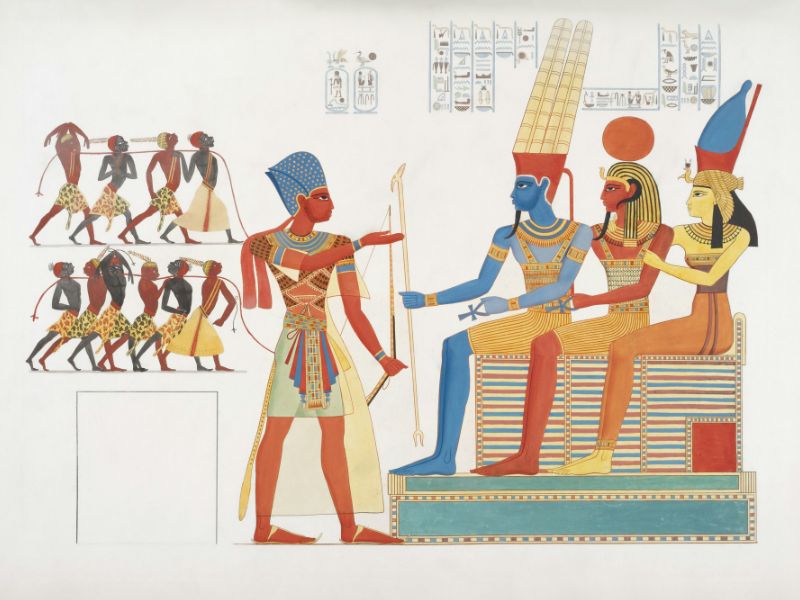
The previous descriptions of past slavery in parts of the world offer just a glimpse of some examples of the practice.
The history of slavery spans many different cultures, nationalities, and religions from ancient times to the present day. Likewise, its victims have come from many different ethnicities and religious groups. The social, economic, and legal positions of slaves have differed vastly in different systems of slavery in different times and places. Slavery has been found in some hunter-gatherer populations, particularly as hereditary slavery, but the conditions of agriculture with increasing social and economic complexity offered greater opportunity for mass chattel slavery. Slavery was institutionalized by the time the first civilizations emerged (such as Sumer in Mesopotamia, which dates back as far as 4000 BC). Slavery features in the Mesopotamian Code of Hammurabi (c. 1750 BC), which refers to it as an established institution. Slavery was widespread in the ancient world in Europe, Asia, the Middle East, Africa, and the Americas.
Ending Slavery
As a broad perspective: how do you climb a mountain? One step at a time. A single leap is not possible and would contradict the facts of reality. Similarly, how do you change a slavery culture that’s been around forever and around the world? One generation at a time. It’s not possible to do it all at once.
Slowly, over many decades, the idea grew that all humans owned their own life. It was parallel to and part of the beginning of the notion of individualism versus collectivism, that a persons’ life was their own and not part of the tribe or the community or one of the many variants of collectivism. The notion grew by fits and starts, ups and downs.
Sowell writes: “Of all the tragic facts about the history of slavery, the most astonishing to an American today is that, although slavery was a worldwide institution for thousands of years, nowhere in the world was slavery a controversial issue prior to the 18th century. People of every race and color were enslaved — and enslaved others. White people were still being bought and sold as slaves in the Ottoman Empire, decades after American blacks were freed.”
The only civilization that tried to stop it, and mainly succeeded, is the West civilizations Britain and the United States.
Britain
In Britian, in 1787 the Society for Effecting the Abolition of the Slave Trade was founded and turned into one of the first broad social movements. It held anti-slavery rallies, boycotted slave sugar, and delivered petitions. Manchester’s petition was signed by almost a fifth of its population. The potter and entrepreneur Josiah Wedgwood produced thousands of medallions with the society’s symbol, a black man in chains asking, “Am I not a man and a brother?”
Just twenty years later in 1807, the anti-slavery movement triumphed. Parliament made slave trade illegal throughout the empire. Britain started offering bounties to privateers who pursued slavers for profit and, more substantially, created the West Africa Squadron to suppress the Atlantic slave trade militarily. The fleet constantly grew, and in the 1850s some twenty-five vessels with 2,000 men were patrolling the African coast and intercepting slave ships. At its peak it made up a sixth of the whole Royal Navy. It was active for half a century, and in total freed around 150,000 slaves.
In February 1815, Britain convinced the representatives of France, Germany, Spain, Portugal, Sweden, and Russia to agree to Act XV of the Treaty of Paris, which proclaimed an end to the slave trade “as repugnant to the principles of humanity and universal morality.”
The next step for the abolitionists was to ban slavery itself. A new British anti-slavery movement was founded in 1823 and ten years later what had seemed impossible just a few years earlier became reality. Parliament passed the Slavery Abolition Act in 1833, which banned the purchase and ownership of slaves by British subjects. 800,000 slaves were freed.
United States (in detail)
James Madison, from Virginia, branded slavery a “national evil,” and Ben Franklin, of Philadelphia, was president of an abolition society. The founders knew they couldn’t free the slaves and win their own independence from Great Britain at the same time, given Southern opposition. But the Declaration laid the moral, political, and social foundation for slavery’s eventual extinction. (Step 1 in climbing the abolitionist mountain: the planted seeds of freedom.)
We must take into consideration that the Founders were born into a world where slavery was the social norm — where slavery existed across the globe as a long-standing practice by conquerors and people in power. Subjugation of humans by others went back thousands of years. The southern American Founders were born on plantations where their fathers owned slaves, and they grew up where it was an integral part of the daily socio-economic status quo. They had never known anything different as a way of life. So, when they inherited those plantations and slaves from their fathers, they continued to run them that way, as ongoing businesses.
And yet they were also the first generation to harbor and voice serious misgivings about the practice — and to literally sign on to language in their Declaration that proclaimed “all men are created equal” in their rights. They knew too well the moral contradiction between their expressed ideal, and how they actually lived. Yet they also knew that their economy and lifestyles were rooted in slavery, and they worried — seriously and sincerely — about what might happen if thousands upon thousands of slaves suddenly found themselves unemployed and rootless and unfed. They feared the violence of racial warfare if that were to happen — and said so.
It was the Founders’ own proclaimed ideals that eventually led to the Civil War of emancipation. It was the Founders’ own proclaimed ideals that great black civil rights leaders, like Frederick Douglass and Martin Luther King, cited as the philosophical foundation of their own crusades for equal rights, demanding that Americans live up to them.
This is the first time in human history on this planet in which a government was conceived upon that vision of equal individual rights.
Ironically, generations of Blacks and women today owe their freedom and opportunities to that generation of morally compromised, slave-holding visionaries who — as flawed as they may have been — nonetheless established the agenda and the mechanisms for their eventual emancipation and economic empowerment.
Slavery has always been an issue, even during the founding of the United States. After the United States was founded in 1776, one by one the Northern states passed emancipation laws, and the country split into slave states (states permitting slavery) and free states (states prohibiting slavery). Slavery became concentrated in the Southern United States.
At the Constitutional Convention in 1787, delegates fiercely debated the issue of slavery. They ultimately agreed that the United States would potentially cease importation of slaves in 1808. An act of Congress passed in 1800 made it illegal for Americans to engage in the slave trade between nations and gave U.S. authorities the right to seize slave ships which were caught transporting slaves and confiscate their cargo. Then the “Act Prohibiting the Importation of Slaves” took effect in 1808. However, a domestic or “coastwise” trade in slaves persisted between ports within the United States, as demonstrated by slave manifests and court records.
As slavery expanded during the second half of the 18th century, a growing abolitionist movement emerged in the North.
From the 1830s to the 1860s, the movement to abolish slavery in America gained strength, led by formerly enslaved people such as Frederick Douglass and white supporters such as William Lloyd Garrison, founder of the radical newspaper The Liberator.
While many abolitionists based their activism on the belief that slaveholding was a sin, others were more inclined to the non-religious “free labor” argument, which held that slaveholding was regressive, inefficient, and made little economic sense.
Black abolitionists and antislavery Northerners led meetings and created newspapers. They also had begun helping enslaved people escape from southern plantations to the North via a loose network of safe houses as early as the 1780s. This practice, known as the Underground Railroad, gained real momentum in the 1830s.
Conductors like Harriet Tubman guided escapees on their journey North, and “stationmasters” included such prominent figures as Frederick Douglass, Secretary of State William H. Seward and Pennsylvania congressman Thaddeus Stevens. Although no one knows for sure how many men, women, and children escaped slavery through the Underground Railroad, it was in the tens of thousands (estimates range from 25,000 to 100,000).
The success of the Underground Railroad helped spread abolitionist feelings in the North. It also undoubtedly increased sectional tensions, convincing pro-slavery southerners of their northern countrymen’s determination to defeat the institution that sustained them.
Slavery became an ever more contentious issue in the 19th century, leading to major controversies and compromises, especially with respect to whether new states would be admitted as slave states or free states.
Civil War
Several events led up to the Civil War. (Here we see the seeds of abolition sprouting and growing.)
1820 The Missouri Compromise
In the growth years following the 1803 Louisiana Purchase, Congress was compelled to establish a policy to guide the expansion of slavery into the new western territory. Missouri’s application for statehood as a slave state sparked a bitter national debate. In addition to the deeper moral issue posed by the growth of slavery, the addition of pro-slavery Missouri legislators would give the pro-slavery faction a Congressional majority.
Ultimately Congress reached a series of agreements known as the Missouri Compromise. Missouri was admitted as a slave state and Maine was admitted as a free state.
1831 Nat Turner’s Rebellion
A slave named Nat Turner incited a rebellion that spread through several plantations on southern Virginia. Turner and about 70 cohorts killed around 60 white people. 55 slaves, including Turner, were tried and executed for their role in the insurrection. Nearly two hundred more were lynched by frenzied mobs. This rebellion was the bloodiest small-scale slave uprising in the American South.
1846-1850 The Wilmot Proviso
This piece of legislation was proposed by David Wilmot at the close of the Mexican-American War that, if passed, would have outlawed slavery in territory acquired by the United States as a result of war, which included most of the Southwest and extend all the way to California. All attempts failed but the intensity of the debate prompted the first serious discussions of secession.
1850 The Comprise of 1850
This compromise admitted California as a free state and did not regulate slavery in the reminder of the Mexican cession. It also strengthened the Fugitive Slave Act, a law which compelled Northerners to seize and return escaped slaves to the South. This Act also led to increased polarization among centrist citizens. Many juries would render a verdict of “not guilty” for a person accused of harboring or helping an escaping slave. (This action of a jury rendering a verdict of “not guilty” when they felt that rendering a guilty verdict in that instance would be unjust is called “jury nullification,” which many judges do not like but there’s nothing they can do about what goes on in the jury room. A jury is judging the law itself to be unjust or unconstitutional.)
1852 Uncle Tom’s Cabin
Harriet Beecher Stowe’s fictional exploration of slave life was a cultural sensation. Uncle Tom’s Cabin was the second-best-selling book in America in the 19th century, second only to the Bible. It’s popularity brought the issue of slavery to life, and widened the division between North and South.
1854-1859 Bleeding Kansas
The Kansas-Nebraska Act of 1854 established Kansas and Nebraska as territories and set the stage for “Bleeding Kansas” by its adoption of popular sovereignty. Under popular sovereignty, it is the residents of the territories who decide if the state is to be free or slave. Settlers from both the North and South poured into Kansas, hoping to swell the numbers on their side of the debate. Passions were inflamed and violence raged. In the fall of 1855, abolitionist John Brown came to fight the forces of slavery, seeking revenge against the killing of an abolitionist printer. A guerilla war ensued, and although the violence was often sporadic and unorganized, mass feelings of terror existed in the territory.
1857 The Dred Scott Decision Scott v. Sandford
Dred Scott was a Virginia slave who tried to sue for his freedom in court. The case eventually went to the Supreme Court, where the justices found, in a 7-2 decision, that enslaved people were not citizens of the United States and, therefore, could not expect any protection from the federal government or the courts. The opinion also stated that Congress had no authority to ban slavery from a federal territory. This decision moved the nation a step closer to the Civil War.
(The decision of Scott v. Sandford, considered by many legal scholars to be the worst ever rendered by the Supreme Court, was overturned by the 13th and 14th amendments to the Constitution, which abolished slavery and declared all persons born in the United States to be citizens of the United States.)
1858 Lincoln-Douglas Debates
Democratic Senator Stephen Douglas faced a challenge for his seat from a relatively unknown one-term former Congressman Abraham Lincoln. In the campaign that followed, they engaged in seven public debates across the state of Illinois, where they debated the most controversial issue of the day: slavery. Although Douglass won the election, these debates propelled Lincoln to the national spotlight and enabled his nomination for president in 1860.
1859 John Brown’s Raid
Abolitionist John Brown supported violent action against the South to end slavery. In October 1959, he and 19 supporters led a raid on the federal armory and arsenal at Harpers Ferry, Virginia, in an effort to capture and confiscate the arms located there, distribute them among local slaves, and begin an armed insurrection. A small force of U.S. Marines led by Col. Robert E. Lee put down the uprising. Seven people were killed and 10 more injured. Brown was tried for treason against the State of Virginia, convicted, and hanged.
1860 Abraham Lincoln’s Election
Abraham Lincoln was elected by a considerable margin despite not being included on many Southern ballots. As a Republican, his party’s anti-slavery outlook struck fear into many Southerners.
On December 2, 1860, a little over a month after the polls closed, South Carolina seceded from the Union. Six more states followed by the spring of 1861.
1861 The Battle of Fort Sumter
With secession, several forts, including Fort Sumter in South Carolina, suddenly became outposts in a foreign land. Abraham Lincoln made the decision to send fresh supplies to the garrisons.
On April 12, 1861, Confederate warships turned back the supply convoy to Fort Sumter and opened a 34-hour bombardment on the stronghold. The garrison surrendered on April 14. The Civil War was now underway. On April 15, Lincoln called for 75,000 volunteers to join the Northern army. Unwilling to contribute troops, Virginia, Arkansas, North Carolina, and Tennessee dissolved their ties to the federal government.
At the start of the Civil War, there were 34 states in the United States, 15 of which permitted slavery.
Slavery was finally ended throughout the entire country after the American Civil War (1861–1865), in which the U.S. government defeated a confederation of rebelling slave states that attempted to secede from the U.S. During the war, U.S. president Abraham Lincoln issued the Emancipation Proclamation, which ordered the liberation of all slaves in rebelling states.
The American Civil War is the conflict with the largest number of American military fatalities in history. In fact, the Civil War’s death toll of around 620,000 (Union plus Confederate) is more than the combined American death toll of World War 1 and World War 2 of more than 520,000.
Hundreds of thousands of soldiers, both white and black, lost their lives fighting to end slavery in the United States during the Civil War. Estimates vary widely due to incomplete and missing records, so the figures don’t always add up.
- Union deaths ~360,000
- White deaths ~325,000
- Black deaths ~36,000
Ending of Slavery in the United States
After the war, the Thirteenth Amendment to the United States Constitution made slavery and involuntary servitude illegal, except as punishment for a crime. The amendment was passed by the Senate on April 8, 1864. After one unsuccessful vote and extensive legislative maneuvering by the Lincoln administration, the House followed suit on January 31, 1865, with a vote of 117 in favor and 56 opposed.
The measure was swiftly ratified by nearly all Northern states, along with a sufficient number of border states up to the assassination of President Lincoln. However, the approval came via his successor, President Andrew Johnson, who encouraged the “reconstructed” Southern states of Alabama, North Carolina, and Georgia to agree, which brought the count to 27 states of the then 36 states on December 6, 1865, leading to its adoption before the end of 1865.
Native American slave ownership persisted until 1866, when the federal government negotiated new treaties with the “Five Civilized Tribes” in which they agreed to end slavery.
So you see, it takes generations to change a culture, once the seeds of an idea have been planted.
Epilogue
Years after the Emancipation Proclamation in the United States, Whites as well as Blacks were still being bought and sold as slaves in North Africa and the Middle East.
When President Bill Clinton apologized for slavery during a visit to Africa, Uganda’s president replied, “African chiefs were the ones waging war on each other and capturing their own people and selling them. If anyone should apologize, it should be the African chiefs.”
The Statue of Liberty, “Liberty Enlightening the World,” is a colossal neoclassical sculpture of a robed and crowned woman. It was a gift to the United States from the people of France, designed by French sculptor Frédéric Auguste Bartholdi, and its metal framework built by Gustave Eiffel. The statue was dedicated on October 28, 1886.
The statue is a figure of a classically draped woman, inspired by the Roman goddess of liberty, Libertas. She holds a torch above her head with her right hand, and in her left had carries a tablet inscribed JULY IV MDCCLXXVI. With her left foot she steps on a broken chain and shackle, commemorating the national abolition of slavery following the American Civil War.
Today, some people advocate reparations by Whites for their past enslaving of Blacks. Given the history described, that is not an agenda based on justice. I can only guess what their agenda is but it’s not justice. To say that people today should atone for the actions of their ancestors is an inversion of justice. One is responsible only for their own actions and is not responsible for the actions of another. It is unjust and illogical to require children born today to be responsible for the actions of their ancestors.
“If you’re going to have reparations for slavery, it’s going to be the greatest transfer of wealth back and forth, because the number of Whites who were enslaved in North Africa by the Barbary Pirates exceeded the number of Africans enslaved in the United States.” ~ Thomas Sowell, Maverick: Jason Riley On the Life and Times of Thomas Sowell (2020)
To summarize in a single sentence, slavery was standard practice throughout human history until it was ended by white people in Western civilization.
____________________
As you are probably aware, many discussions on this topic are sometimes unfriendly and contain logical fallacies. If you decide to leave a comment, or even outside of this post, if you decide to have a discussion, public or private, you might find it helpful to follow the suggestions on my post How to have a successful discussion.
Photo Credits
1. Carving of ancient Egyptian slaves: Ahad Hasan from Pexels
2. Painting of ancient Egyptian slaves: The New York Public Library from Unsplash
Great summary of the history of slavery. I wish more individuals would dig deeper into the history and not get caught up the the rhetoric of today’s society regarding reparations and many other issues surrounding this topic. Thank You for your research and for summarizing as best you can given the depth of history.
Thank you, Patrick. I learned a lot doing the research.