
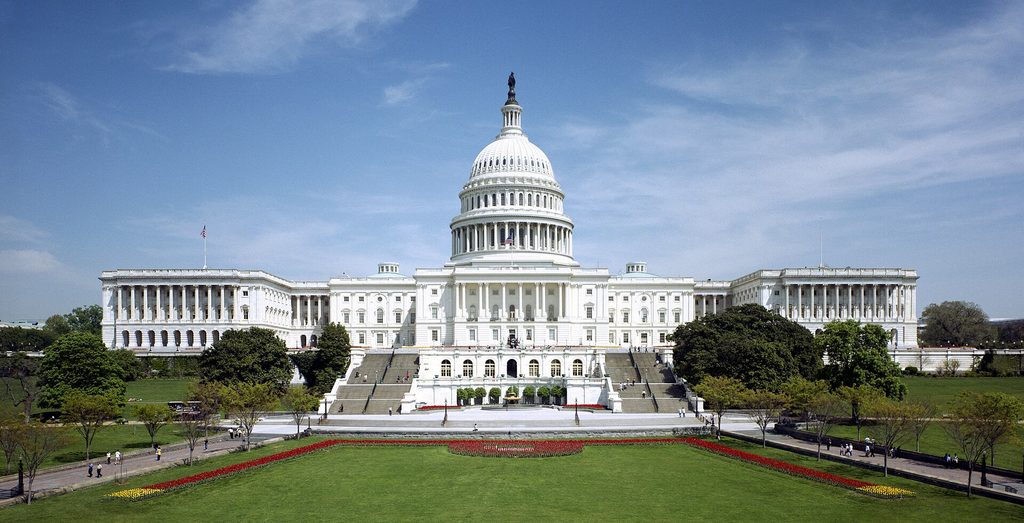
What is a government, and more importantly, what is a PROPER government? There is much discussion that our current government is not doing all that it should and is doing things it shouldn’t. Currently our government is a mixed bag.
To discuss what government is and what it should and should not do, it is important to start with fundamentals and clear definitions. The context of this discussion is that we live in a society, and since a society consists of human beings, we must start with the nature of a human being.
A human being is not an animal that survives by instinct or by being fed. We survive by using our mind and making choices. We have to think, plan, choose, and act. We produce our food, our homes, our technologies, our businesses, our medicines, our art, our wealth. We don’t survive by simply existing; we survive by purposeful action among many choices guided by reason.
REASON means using observation, logic, and evidence to identify and understand reality.
This has a moral implication.
If human life depends on reason and choice, then human beings need freedom to act on their own judgement. Not permission from a committee. Not a ration from a bureaucracy. Not “support” with strings attached. Freedom.
That is what rights are for.
RIGHTS
Rights are not gifts from society. Rights are not privileges granted by the majority.
- RIGHTS are conditions of existence required by man’s nature for his proper survival.
- RIGHTS are moral principles that recognize a fact about human life: rational beings must be free to act, to produce, to trade, and to keep the product of their effort, if they are to live.
- A RIGHT is the sanction of independent action. A RIGHT is that which can be exercised by any person without anyone’s or any government’s permission.
- A RIGHT is the moral sanction of a positive – of a man’s freedom to act on his own judgment, for his own goals, by his own voluntary uncoerced choice.
Rights are all based on the ethical premise that MAN’S LIFE IS THE STANDARD OF MORAL VALUE. That is, the GOOD is that which supports and furthers man’s life qua man.
The right to life is the most fundamental right.
- The right to life means the right to engage in self-sustaining and self-generated actions required by the nature of a rational being for the support, the furtherance, the fulfillment, and the enjoyment of his own life.
The right to life implies the following three fundamental rights.
- The right to liberty is the right to think and to act on one’s own judgment.
- The right to the pursuit of happiness is the right to live for one’s own sake, to choose and to work for one’s own personal goals.
- The right to property is the right to work for the achievement of one’s values and to keep the results. It includes the right to the use and disposal of that which one has produced or earned.
It should be noted that these four rights are all interconnected. To recognize one is to recognize all. To violate one is to violate all.
There are many derivative rights that follow directly from the above fundamental rights. Here are a few examples.
- The right to defend yourself
- The right to choose or not choose or change a religion
- The right to free speech
- The right to travel
- The right to marry or not marry
- The right to refuse medical treatment
- Lots and lots more
All these rights are derived from reality, from our nature as human beings. They are not “endowed” by a god or given by a government or dreamed up by whim. They are inalienable.
Living in a civilized society requires that we respect these rights that we all have and that we interact with each other only by voluntary transactions and not by force or coercion.
Any alleged right that violates the rights of another person is not and cannot be a right. For example, if a thief claims a right to your money or property against your will, then that is not a right because it violates your right to your property and life.
No one has a right to your life. Not your time. Not your labor. Not your income. Not the product of your mind. Other people can ask. They can persuade. They can offer trade. They can offer a partnership. They can build voluntary institutions. They can form communities and charities. They can appeal to your values. But they cannot claim your life by right.
The moment someone claims a right to your effort, they are treating you as a means to their ends.
Unfortunately, living in a society, there are some who would use force against you, violating your rights.
- Criminals
- Fraudsters
- Rapists
- Foreign invaders (countries)
- And many others
GOVERNMENT
When someone violates your rights, such as a hold-up man or a rapist, you have the moral sanction to defend yourself, to protect your rights. This is because the right to life and all its derivatives imply the right to self-defense to protect your rights.
However, in a civilized society, force may be used only in retaliation and only against those who initiate its use to violate our rights.
The retaliatory use of force requires objective rules of evidence to establish that a crime has been committed and to prove who committed it, as well as objective rules to define punishments and enforcement procedures. Without such rules, society would degenerate into mob rule, lynch law, and an endless series of bloody private feuds or vendettas.
If physical force is to be barred from social relationships, we need an institution charged with the task of protecting our rights under an objective code of rules. This is WHY we need a government. The Founders got this one correct: “…to secure these Rights, Governments are instituted among Men …”
Hence, the task of a government – of a PROPER government – its basic task, its only moral justification, and the reason WHY we do need a government – is as an objective agent for our self-defense.
A GOVERNMENT is an institution that performs the task of formulating and enforcing the laws of a country. The distinguishing attributes of a government are
- Exclusive jurisdiction over a geographical territory, where its laws apply to all inhabitants, and where it holds the exclusive power to enforce certain rules of social conduct in that given geographical area.
- A monopoly on the initiation of physical force within that territory
- “Government is not reason, it is not eloquence – it is force!”
All governments have these attributes. All governments operate by force. But we are talking here about a PROPER government.
As stated above, the ONLY purpose of a PROPER government is to recognize and protect man’s rights, which means: to protect him from physical violence and fraud. A PROPER government is only an agent of man’s self-defense and as such may resort to force only against those who start the use of force. Hence, the ONLY functions of a PROPER government are:
- The police – to protect you from criminals
- The armed forces – to protect you from foreign invaders
- The courts – to protect your property and contracts from breach or fraud by others, and to settle disputes by rational rules according to objective laws



With such a government, an individual’s ONLY responsibility is to not violate the rights of other human beings. Live and let live.
Only with a PROPER government can an individual pursue his dreams, achieve his personal goals no matter how low or how high, live life without interference, and achieve his rational happiness.
ANY interference or restrictions by government stifles independence and creativity, and goes against the nature of the requirement of a human being to have freedom of action for survival and happiness. Such a government is not a proper government.
Such interference includes taxes, regulations, restrictions, and compulsory requirements. Since government acts only by force, all these interferences violate the rights of individuals, and such a government is not a proper one.
So, if a proper government’s only functions are the police, the armed forces, and the courts, then how do things get done that an improper government is doing that many people want, such as education, healthcare, retirement security, welfare, food and medicine safety?
That is the subject of another post.
As you are probably aware, many discussions on this topic are sometimes unfriendly and contain logical fallacies. If you decide to leave a comment, or even outside of this post, if you decide to have a discussion, public or private, you might find it helpful to follow the suggestions on my post How to have a successful discussion.
Writing Credits
Most of this is my writing. Some of it comes from writings by and about Ayn Rand and from writings by Xenia Ioannou, who is one of the most articulate authors I know.
Photo Credits
U. S. Capitol Building: PD-USGov-Congress-AOC
Police: pexels-brett-sayles-15476182
USS Gerald R. Ford: Public domain
Court: Unknown