
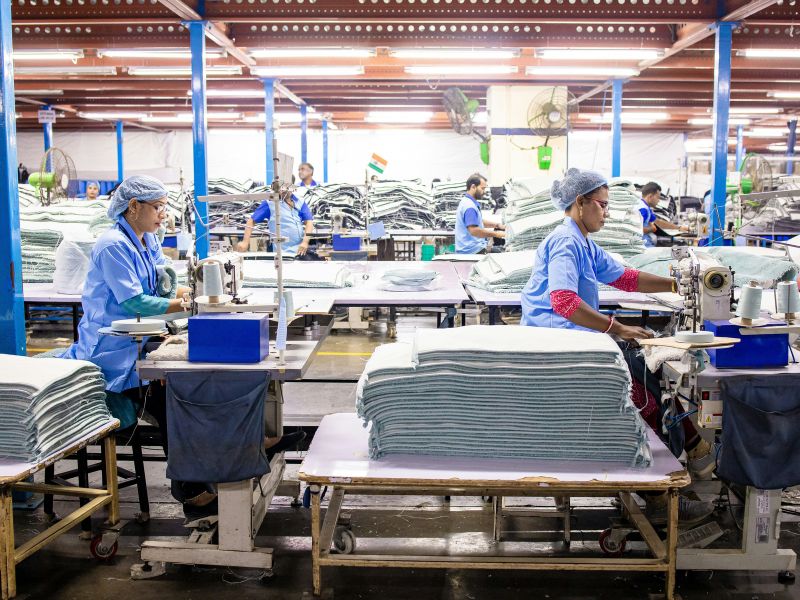
Most of what we have and consume is not totally made in America. Many times, the items are simply assembled here with parts from around the world. America, like all other countries, is a participant in a global economy. And by “America” and “all other countries” I mean the individual citizens of all countries. We, as individuals, and companies, run by individuals, buy and sell items that have multitudes of origins in their creation.
Even the term “Made in America” is fraught with many difficulties. It could mean:
- American ownership
- American factory
- American workers
- 100% American/U.S.-sourced raw materials/components
- Made in USA, but some imported material may be involved
- Mostly American – substantial U.S. manufacturing but definitely not an all-American supply chain
A strong example of the first four is American-grown cotton sheets and towels. Cotton is grown in the American Southwest, and is spun, woven, finished, and sewn domestically. However, the dyes used to color the fabric may come from abroad. Even “white” sheets have to have the raw cotton fabric scoured and bleached to remove impurities to produce a white appearance. And where do the bleach, the dyes, and the finishing chemicals come from? That is not indicated on the “Made in the USA” label. That information is buried in the supply chain information.
Furthermore, even if ALL the components of a product were from America and produced in an American-owned factory by American workers, just where do the materials used to build the factories, the machines, the shipping materials, etc. come from? Are they all American? Surely not. Does this disqualify an “American” label if they are made with foreign machinery or in a factory built with some foreign materials? Even raw agricultural products do not pass this test, as tractors, sprinklers, silos, etc. are made with materials partly from around the world.
An example of the complexity of even a simple product, a yellow No. 2 pencil, is described in I, Pencil by Leonard E. Reed. https://fee.org/ebooks/i-pencil/ The main components of such a pencil are the core (the “lead”) made with graphite mixed with clay; the wood casing made with cedar (usually incense-cedar); the ferrule (metal band) made with aluminum or brass; the eraser made with synthetic rubber, pumice, and sulfur; paint/lacquer made with pigments, resins, and solvents; and glue (for binding parts) made with synthetic adhesives. The materials do not all come from the United States. There is worldwide trade with many countries involved in the making of a simple yellow No. 2 pencil.
Now think of what trades with different countries are involved in making the complex items we take for granted in our everyday lives, from clothing and household furnishings and appliances to computers and cars and buildings. It would be impossible to have everything we use to be totally made in America, or in any single country. As such, “Made in America” is an impossibility and is just another political slogan to support restrictions and tariffs on free trade to favor some politically-connected companies or organizations.
Face it. We are an integrated global economy, and any disruption to free trade caused by regulations or tariffs to achieve a “Made in America” economy is detrimental to our very livelihood.
A free market, domestically and internationally, is the ONLY path to general prosperity. International trade is not mortal combat but a form of cooperation and a means of expanding worldwide production, knowledge, and prosperity.
____________________
As you are probably aware, many discussions on this topic are sometimes unfriendly and contain logical fallacies. If you decide to leave a comment, or even outside of this post, if you decide to have a discussion, public or private, you might find it helpful to follow the suggestions on my post How to have a successful discussion.
Photo Credit:
Assembly line photo by EqualStock on Unsplash